6 Beginner Motorcycling Mistakes to Avoid

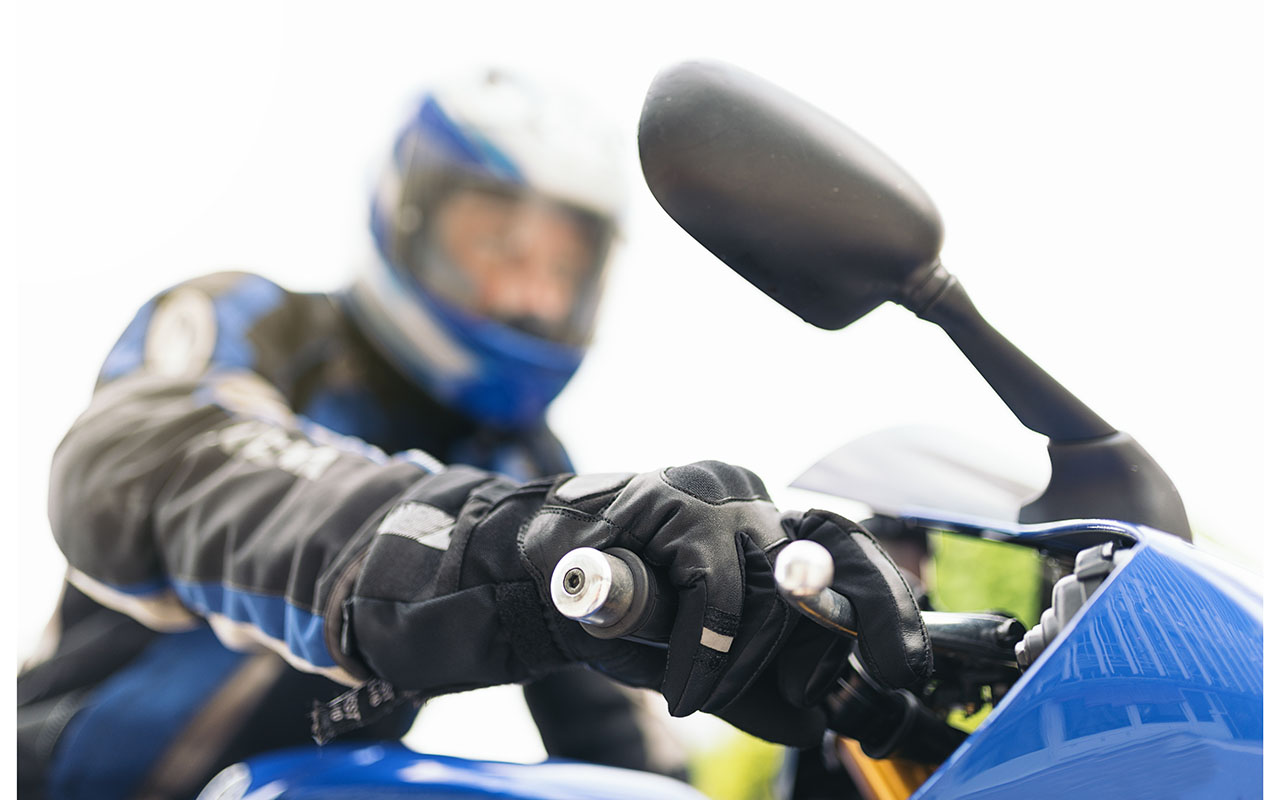
We’ve assembled a breakdown of common motorcycling mistakes to avoid.
1) Don’t Skip the Rider Training Course
To most good riders, these “don’ts” probably seem blatantly obvious, but none are as simple as skipping rider training. The upsides to a good rider training course are numerous. Fundamentally, it teaches riders tried-and-tested techniques to build upon as a new motorcyclist that develop proper riding habits from highly experienced riding instructors.
Learning from a friend or a YouTube video could mean missing out on instrumental lessons that will serve you well for your entire riding career. Better still, most riding schools offer small-displacement, easy-to-handle motorcycles. Not only are they specifically chosen to be nimble and easy to ride, but in the off-chance you have a low-speed tip-over, isn’t it better to do it on a school’s “rental bike” than your own new toy and likely pride and joy?
Beyond that, there’s the benefit of potentially saving money on the DMV test and on insurance if you take a suitable course. A small investment in rider training up front can mean saving significant money over the long term in insurance.
Best of all, rider training isn’t just for new riders. Experienced riders can have a blast learning about new techniques on advanced rider training courses for race and track schools, trail and ADV bike riding, or even just refresher courses for the street. If you’re doing it right, the learning should never stop.
2) Don’t Buy Too Much Bike
Many riders make the mistake of going for their dream bike first. Try walking before you run. Buying a smaller, used motorcycle may seem like a downgrade, but it will allow you to learn valuable skills without scaring yourself silly. Even riding a slow motorcycle is fun, so there’s no need to rush into buying the fastest and most expensive motorcycle in the showroom. Also, it is not uncommon, for new or experienced riders, to have a bike tip over at either slow or even no speed. It’s less heartbreaking when it happens to a motorcycle that already has a scratch or two.
Every rider, even those with minimal experience, will happily give advice on what the best first bike is. The reality is that there’s no hard-and-fast rule, since every rider is different. There are many factors in deciding the ideal first bike, including age, experience, physiology and ability, not to mention budget and how and where the bike will be used.
First and foremost, a rider’s size matters a lot. A new rider who is five-foot-one with a slender build will surely find a small-displacement, lightweight bike a better choice than someone who is a foot taller and twice the weight. For riders looking for something light and agile, a 300–500 cc sport bike is a great stepping stone, offering manageable power and mass that won’t overwhelm.
The Husqvarna Svartpilen 401, Honda CBR300R, Yamaha YZF-R3, and Kawasaki Ninja 400 are all good options.
Similarly, in the adventure bike category, there are a growing number of small and mid-sized bikes that aren’t as tall or heavy as larger, traditional ADV bikes. Models like the KTM Adventure 390 R, Royal Enfield Himalayan, and the CFMoto Ibex 450 allow riders to enjoy having adventures both on and off the pavement without being overwhelmed by the speed and stature of a massive motorcycle.
Riders who prefer a cruiser or classic-style motorcycle may find that larger-displacement bikes between 800 and 1,000 cc, like the Triumph Bonneville, Harley-Davidson Sportster 883, or Honda Rebel, provide low seat heights (and center of gravity) along with modest, manageable power, making them a decent choice for novice riders, too.
It’s always better to learn on a smaller or lower-powered bike and trade up to a more powerful machine once you’re comfortable, rather than starting out on too much machine that scares the fun out of riding. Besides, most expert riders have learned that riding smaller, lighter machines is tons of fun because of how nimble and maneuverable they are. Anybody can snap open the throttle on a high-powered bike and go fast in a straight line, but only a skilled rider can ride any bike smoothly and quickly in the corners.
3) Don’t Skip the Insurance, Either
Most states require a bare minimum of liability insurance, which may or may not be enough if a momentary miscalculation causes a serious collision. Insurance is there to help protect your assets, or your loved ones from being required to foot the bill for your mishap. It’s also there to help cover costly medical bills in the event of an injury. Recovering physically from a crash may be completely doable, but without proper coverage, it could mean never recovering financially.
4) Don’t Cheap Out on Gear
Sure, riding looks cool, but sometimes the weather is hot. That’s still no excuse not to wear all the gear, all the time. Starting with the top, a DOT-compliant helmet should be a no-brainer. Statistically, helmets reduce riding fatalities by about 37 per cent, while reducing brain injuries by nearly 70 per cent. And while a little beanie helmet is better than nothing, anyone who’s taken a stone or large insect off the face at 60 mph will surely be a proponent of full-faced helmets.
A proper riding jacket, riding pants, and boots are all designed to help with impact absorption in a collision, or with the ground. But they’re also designed to withstand abrasion that a sweatshirt, track pants, and sneakers can’t. There’s a common phrase among experienced riders: “Dress for the slide, not the ride.” Nobody ever sets off on a ride expecting to go down. The reality is, no matter how good a rider is and how well they can anticipate incidents, inattentive and unpredictable fellow motorists and animals can cause a crash that will result in serious injury, especially for the unprotected. If you thinking wearing riding gear is uncomfortable, imagine how a skin-graft would feel.
5) Don’t Ride Someone Else’s Ride
This has multiple meanings. Firstly, don’t get on someone else’s motorcycle without asking. And if you do, be prepared to pay for any damage caused. You break it, you buy it.
Next, don’t feel the need to always keep up with other riders, pushing you beyond your limits. Group rides can be a great way to meet other riders who are equally enthusiastic about riding, but they can also add pressure for less experienced riders to keep up.
Every rider has a different level of experience and comfort, particularly when it comes to their own motorcycle.
There’s far less shame in catching up at the next coffee or gas stop than a bruised ego caused by a crash. And as your mom would tell you, if they give you a hard time about it, you probably need new riding buddies. Experienced riders and decent humans know that everyone starts somewhere.
6) Don’t Ride Impaired
Here are some sobering statistics: According to the U.S. Department of Transportation a quarter of all motorcycle fatalities in 2024 were alcohol-related, while 40 per cent of riders who died in single-vehicle crashes were alcohol-impaired. The fact is, motorcycling requires more skill, coordination, and attention than driving a car. Alcohol and drugs dull the senses and slow reaction times, elevating the likelihood of crashing significantly. Since everybody metabolizes alcohol or other influences at different rates, the safest rule of thumb is to consume no alcohol or drugs if you’re going to ride.
For those who insist on a drink, plan to cut yourself off much sooner than you would otherwise. And as a reminder, riding fatigued is also riding impaired.
Do: Ride Smart
None of the rules listed above make motorcycling any less fun, and in most cases, make it more enjoyable.
Take the course, buy the bike that fits, get insured, wear the gear, stay sober, and ride your own ride.
Jeff Wilson
You might also like


