2026 Royal Enfield Bear 650 First Ride

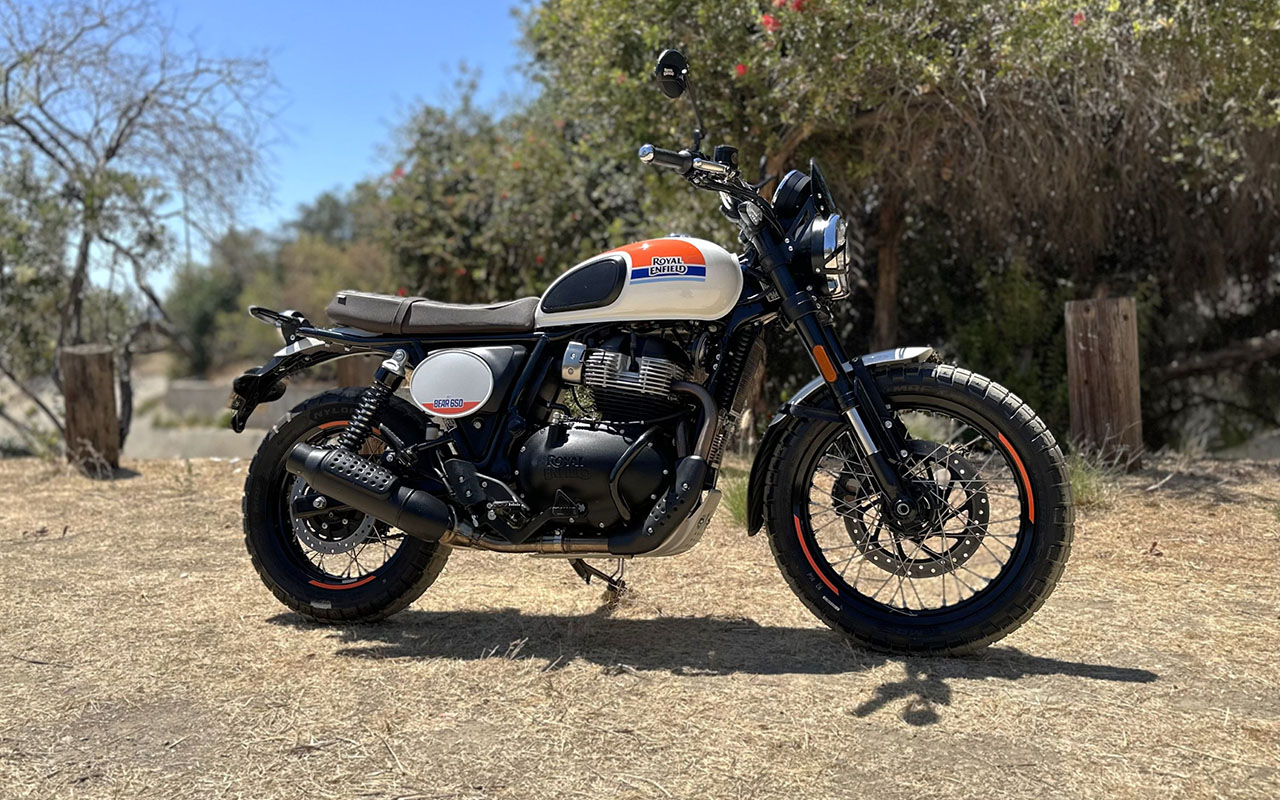
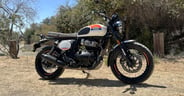
How many ways can you repackage a trusty parallel-twin platform? In Royal Enfield’s case, we’ve lost count. The brand’s latest iteration of the 650 cc foundation came in the form of the Bear 650. Based on Enfield’s existing Interceptor 650, the scrambler-flavored Bear 650 changes things up from that model by swapping in new wheel sizes, stretching out the ergonomics, and updating the suspension to go with a taller subframe. Reinforcements to the frame are also in the mix in order to handle rougher terrain. There’s no question the Bear 650 adheres to RE’s period-specific retro formula, but pares it down to a more rugged package.

A Tribute to the Past
Credit the 1960 Big Bear Run with the inspiration for the Bear 650. The legendary, grueling desert and mountain race in Southern California was won that year by 16 year-old Eddie Mulder, who crossed the finish line on a 500 cc Royal Enfield. Once again taking a page from the history books, Enfield came up with this modern version of a scrambler to commemorate that victory.
All in the Family
While that makes for a good story, the modern Bear 650 bears (ahem) little mechanical resemblance to that single-cylinder desert racer of yore. Sharing parts and much of the silhouette of the current INT 650, including the 3.6 gal fuel tank, we’ve got to admit it’s a great-looking bike in its own right.

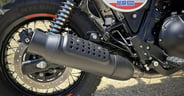
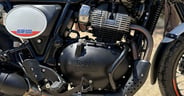
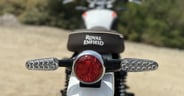
The Bear 650 utilizes the same 648 cc air-cooled parallel-twin engine and steel-tube chassis as the INT, but gets longer-travel suspension with a new fork, new wheels, and heavily revised ergonomics, along with a new exhaust setup and all-LED lighting.
Ergos and Measurements
The first thing you’ll notice as you ogle the Bear 650 is that it’s taller than most other Enfields, though the cockpit is fairly unintimidating, with user-friendly controls and a minimum of electronic gizmos. Thanks to the taller suspension, higher seat, and new subframe, however, ergonomics are quite a bit rangier than other Enfield 650s we’ve ridden. The pegs are slightly rearward of a mid-mounted position, and the Bear’s handlebar is taller as well, resulting in a more upright riding position. Most riders under six feet tall will feel perfectly comfy on the Bear, as its ergos set you up with lots of space onboard.

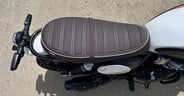
The one-piece bench seat sits at 32.7-inches but is contoured at the sides to help riders reach terra firma, which I could, though not with a flat foot on the ground. At that height, the bike’s heft was noticeable off the side stand; you can feel all 476 lb of the wet weight.
On the Road
We’re quite familiar with the 650 twin engine utilized on the Bear, and it kept us mostly entertained for the day, whether we were lugging it in town or winding it up on the freeway. The 648 cc air-oil-cooled twin’s claimed 46.4 hp handles higher speeds with ease, and the throttle is responsive but not snatchy, with smooth acceleration that comes on gradually.

The motor feels strong, though it doesn’t come on in a huge rush. A good serving of torque comes just off idle and builds steadily, with the 47.1 lb-ft peak coming at 5,150 rpm. Clutch pull is reasonably light, and the six-speed gearbox clicked out easy shifts consistently. On the highway, you’ll want to keep the throttle at the ready; the engine has plenty to give and will keep up with 80 mph traffic well, but you need to stay on it. With wind protection being nonexistent, long stretches of 75-plus mph speeds became pretty tiring. Adding to the discomfort was the thinly padded seat and engine vibrations that would creep into the bars at higher speeds.

As for ride quality, we found the inverted fork to be well-tuned, making the ride mostly pleasant, with 5.1-inches of travel to absorb most road acne. We couldn’t say the same for the preload-adjustable shocks out back, which felt overly stiff, even with 4.5-inches of travel. They could have used a bit more rebound damping. The Bear 650 proved to be a competent performer in the tighter stuff, though handling isn’t what you’d call agile. You need a good shove on the bars to lean it over in tighter turns, and the somewhat stiff rear occasionally upset the ride on sharper bumps.
We found Enfield’s familiar ByBre braking system to be up to par here, with the 320 mm disc up front grabbed by a twin-piston caliper and a 270 mm disc out back paired with a single-piston caliper. The stoppers have enough power to capably bring the Bear to a halt at modest speeds, but I found myself using both brakes for a better result.

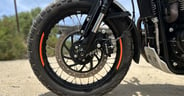
But what about the Bear’s supposed off-road capability? To find out, we jumped onto a (very) short fire road to test its scramblerized wheels. The 19-inch front hoop and a 17-inch rear are wire-spoke units, though the tires do require tubes. Those MRF tires look suitably chunky with deep tread blocks and handled the brief stretch of sand capably enough, though a more thorough ride would be a better judge. It was also nice to find out that the rear ABS can be switched off.
Features and Fuel Economy
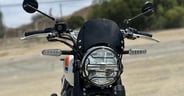
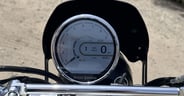
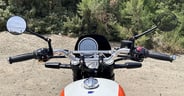
It’s got that retro appeal dialed in, but the Bear’s instrumentation will quickly give it away as a modern machine, as it sports the circular color TFT dash with Tripper navigation system above the handlebar.

The display gives you the usual readouts like tripmeter, speed, and fuel, and if you link your phone via the Royal Enfield app (you need to have your phone connected), you can stream music and get calls as well as tap into Google Maps for navigation. It was easy to read in most conditions and gave us all the info we needed for our daylong sojourn.
Competition and Comparison
If you’re looking at competition, the bikes most likely to come up are the Honda SCL 500 ($7,599) and Husqvarna Svartpilen 401 ($5,899). The Triumph Scrambler 400 X splits the difference in price at $6,195.

The Honda brings ride modes, traction control, and lighter weight, while the Husky adds adjustable suspension and even more electronics. The smaller displacement Triumph is lighter in the power department, but also in stature. For visual appeal, you can’t beat the Bear. There’s really nothing else like it in the 650 air-cooled category.
Colors and Pricing
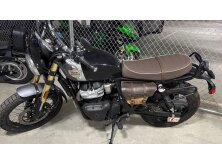
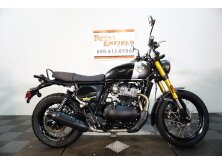
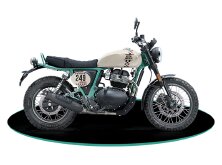
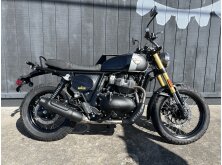
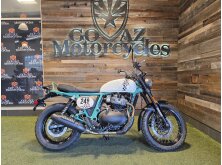
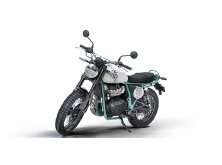
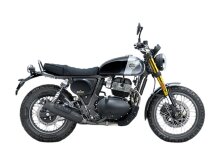
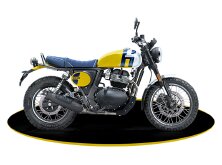
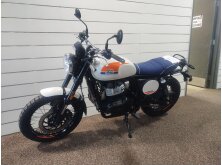
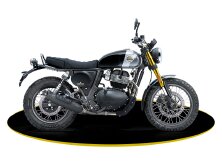
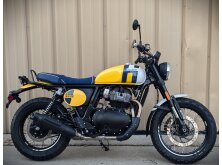
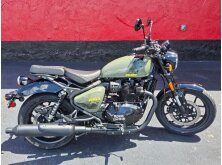
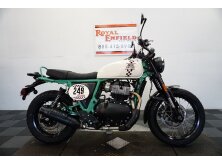
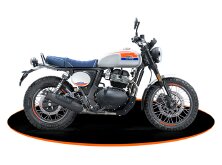
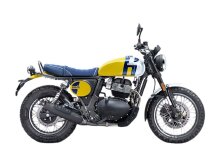
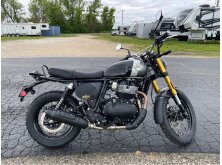
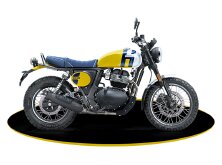
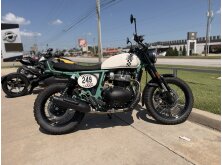
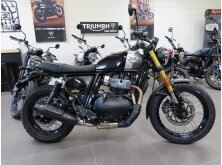
For 2026, the Bear 650 carries an MSRP of $7,499 for any of the four enticing color options, including our Boardwalk White test unit, the Wild Honey color, Golden Shadow, and the Two Four Nine treatment. The Bear is priced below the Bullet 650 but at the same level as the Shotgun 650 and Classic 650 models.

Final Thoughts
The 2026 Royal Enfield Bear 650 is a solid tribute to the brand’s 1960s desert-racing era, with impressive detailing and finishes applied to a competent foundation. It looks authentically old-school and works well, though it’s too heavy and needs different tires for anything more than non-technical off-road trails. For authentic retro aesthetics and value, however, it’s in a league of its own.
Marketplace Inventory
 Andrew Cherney
You might also like


